
Last updated: 1 August 2026
The best air conditioner for a UK home in 2026 is a Gree R32 inverter unit sized to the room’s floor area — a 2.5kW wall-mounted split for a single bedroom, a 5.0kW split or cassette for an open-plan lounge, and a heat-pump portable unit for renters who can’t fit outdoor pipework. Price, install type and BTU rating are the three factors that decide which one is right for a given room.
Quick Answer: Best Air Conditioner by Room Type
| Room / Use Case | Best Unit Type | Recommended Model | Price |
|---|---|---|---|
| Single bedroom (up to 20m²) | Wall-mounted split | Gree Fairy 2.5kW (9000 BTU) | £699 |
| Double bedroom / home office (20–30m²) | Wall-mounted split | Gree Fairy 3.5kW (12000 BTU) | £799 |
| Open-plan lounge / kitchen-diner (30–45m²) | Wall-mounted split | Gree Fairy 5.0kW (18000 BTU) | £999 |
| Large living space (45m²+) | Wall-mounted split | Gree Fairy 7.0kW (24000 BTU) | £1,199 |
| Extensions, low ceilings, discreet install | Ceiling cassette | Gree U-Match 3.5kW Cassette | £989 |
| Commercial / open office space | Ceiling cassette | Gree U-Match 12.0kW Cassette | £2,395 |
| Renters, no permission for outdoor unit | Portable heat pump | Gree Portable 3-in-1 (12000 BTU) | £479 |
Wall-Mounted Split Systems: Best for Most UK Homes
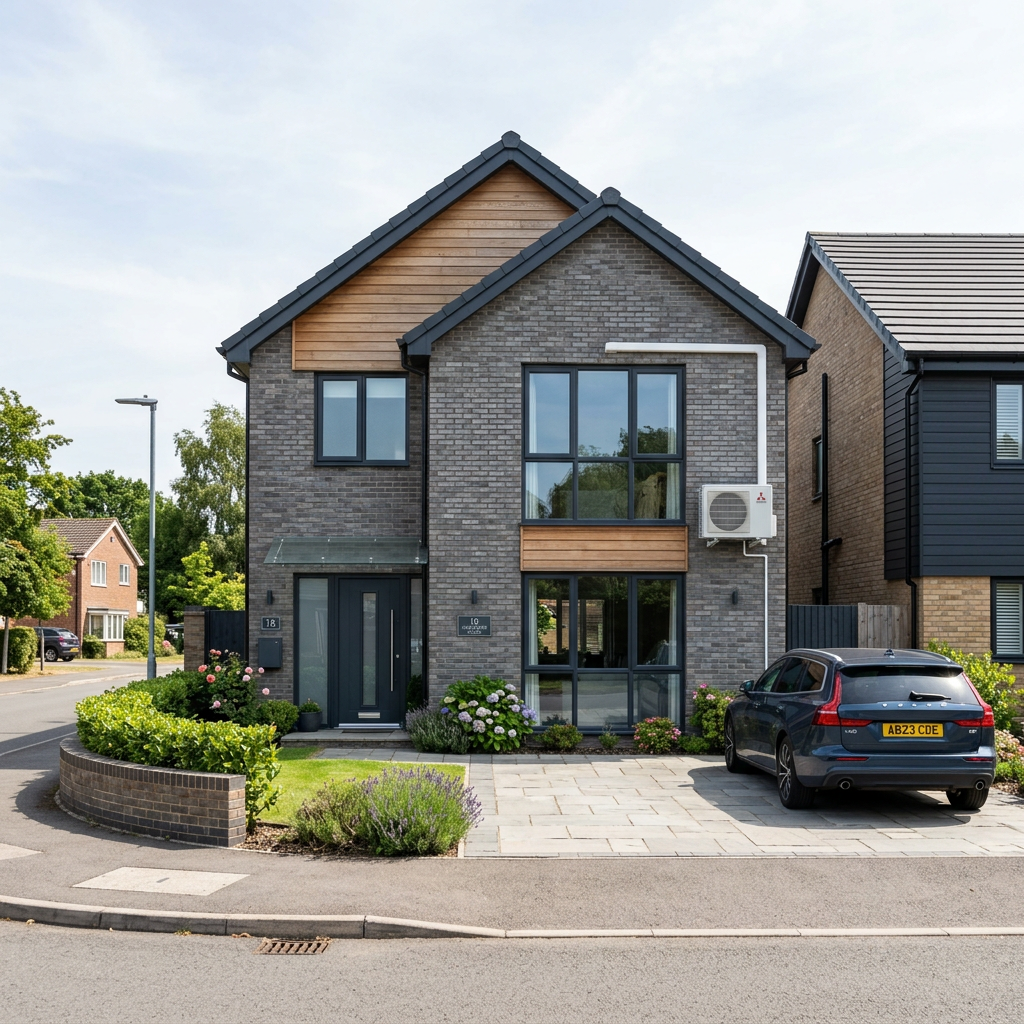
A wall-mounted split system is the right choice for most UK bedrooms, home offices and living rooms. An indoor unit is fixed high on an interior wall and connects via refrigerant pipework to an outdoor condenser, giving quieter, more efficient cooling than a portable unit because the compressor noise sits outside.
The Gree Fairy series runs four sizes covering 9,000–24,000 BTU (2.5kW–7.0kW), all using R32 refrigerant — a gas with 68% lower global warming potential than the older R410A standard still found in budget units.
Pros
- Quietest option — compressor noise is outdoors
- Most energy-efficient per BTU (A+ to A++ rated)
- Permanent, discreet installation
- Best resale/property value impact of the three types
Cons
- Requires professional installation and F-Gas certification
- Needs landlord permission in rented property
- Higher upfront cost than portable units
Ceiling Cassette Systems: Best for Extensions and Open-Plan Spaces
A ceiling cassette recesses into the ceiling void and distributes air in four directions, which suits low-ceilinged extensions, kitchen-diners and rooms where a wall-mounted box isn’t practical or aesthetically welcome. The Gree U-Match series scales from 13,648 BTU up to a commercial-grade 43,675 BTU (12.0kW) unit.
Pros
- Even air distribution across larger, open-plan rooms
- Discreet — no wall-mounted box in sightline
- Scales to commercial-size spaces (A++ rated at the top end)
Cons
- Requires ceiling void access — not viable in every property
- Most expensive installation of the three types
- Higher upfront unit cost than equivalent wall-mounted BTU
Portable Air Conditioners: Best for Renters
A portable unit needs no outdoor installation — just an exhaust hose through a window vent kit — which makes it the only realistic option for renters who can’t get landlord sign-off for permanent pipework. The Gree Portable 3-in-1 is a genuine heat pump, meaning it heats in winter as well as cools in summer, plus runs as a standalone dehumidifier — three functions in one 12,000 BTU unit for £479.
For a full breakdown of portable AC pros, cons and buying advice, see our Portable Air Conditioner Buying Guide.
Pros
- No professional installation required
- Move it between rooms as needed
- No landlord permission needed for most models
- Lowest upfront cost
Cons
- Noisier — compressor is in the room with you
- Less efficient per BTU than a split system
- Takes up floor space
How to Choose: 4 Buying Criteria
- Room size in m². Use the 350 BTU per m² rule as a starting point — a 20m² bedroom needs roughly 7,000 BTU minimum. See our full Air Conditioner Size Guide for a room-by-room BTU calculator.
- Rental vs. owned property. Renters without permission for outdoor pipework should default to a portable heat-pump unit. Homeowners get better long-term value from a wall-mounted or cassette split.
- Running costs. Inverter units with a higher SEER/energy rating cost more upfront but less to run. See our Air Conditioner Running Cost UK guide for £-per-hour estimates by BTU size.
- Refrigerant type. Choose R32 over older R410A units — R32 has 68% lower global warming potential and is the current UK/EU standard for new installations.
Frequently Asked Questions
What is the best type of air conditioner for a UK home?
A wall-mounted split system is the best all-round choice for most UK homes — it’s quieter and more efficient than a portable unit, and cheaper to install than a ceiling cassette. Renters who can’t install outdoor pipework should choose a portable heat-pump unit instead.
Do I need planning permission for air conditioning in the UK?
Most domestic air conditioning installations fall under permitted development and don’t need planning permission, but leasehold and rented properties typically require landlord or freeholder consent before an outdoor unit can be fitted. Always check your lease or tenancy agreement first.
How much does it cost to install air conditioning in a UK home?
A single-room wall-mounted split system costs £699–£1,199 for the unit, plus professional F-Gas certified installation. Portable units from £479 need no professional installation at all. See our running cost guide for ongoing electricity costs.
What’s the difference between R32 and R410A refrigerant?
R32 is the current UK/EU standard refrigerant, with 68% lower global warming potential than the older R410A gas. All current Gree units sold by HeyBreeze use R32.